-
FORSIDE

- Blog
Gedser Fuglestation Blog
Her på Gedser Fuglestations blog bringes korte nyheder i dagbogsformat om hændelser på fuglestationen.
Spurvehøge næsten som 'i gamle dage'
Ringmærkningen: På grund af den hårde vind ville det være uforsvarligt at udsætte fuglene for fangst. Derfor ingen ringmærkning denne mandag.
Trækket på Odden: Vinden fra nordvest kom med 12-14 meter i sekundet, og det var for meget til ringmærkningsfangst, så vi var til gengæld hele tre fra fuglestationen ude at stå i læ ved den gamle marinestation for at se, hvad dagen kunne bringe af fugle på træk. Selv om vinden var hård, var luften 10 grader, og det føltes lunt i det flotte solskin, som vi havde det meste af tiden.
Endnu en gang fik vi bekræftet, at man bare skal gå ud på Gedser Odde med åbent sind og ikke forvente noget bestemt. Det er, som andre har skrevet, en af de mest varierede træklokaliteter i Danmark. Er der ikke det ene at se, er der noget andet. Søndag var der 4.700 Ederfugle på træk i standardtiden. Mandag var der 122 og ikke ret meget at tælle over bølgerne i det hele taget. Til gengæld var der kun en enkelt rovfugl søndag. Dem havde vi så over 130 af mandag med Spurvehøg (Accipiter nisus) i den lind strøm, der mindede om ’de gode gamle dage’, da vi på en god oktoberdag kunne se dem i hundredvis. Mandag blev det til 126, og med nu samlet set 2.357 har vi nu ikke bare slået det ringeste år 2025, men også det næstringeste på 2.051 i 2024.
 Næsten alle dagens langt over hundrede Spurvehøge forekom at være mindst et år gamle hanner. Mange af dem er tydeligt små som Solsorte (Turdus merula), og de forekommer mørkere end hunnerne med deres dybt blågrå oversider og rødtonede undersider. Foto: Ole Friis Larsen/GFU


Vi bestemmer ikke køn og alder på de Spurvehøge, vi ser, fordi vi normalt ikke har folk nok til det, men egentlig er det ofte let at se på størrelsen, om det er en (lille) han eller en (stor) hun. Langt flertallet af mandagens 126 Spurvehøge forekom således at være adulte/voksne hanner, hvilket vil sige mindst et år gamle hanner. Foruden at de er små, har de lidt ældre hanner ofte et tydeligt rødt skær over undersiden kombineret med en tydeligt blågrå oversiden. Det kunne være interessant at fokusere nærmere på, at hannerne bliver længere i deres territorier, før de forlader dem og kommer som de sidste i trækket, eller der er en anden forklaring. Det kunne også være, at hannernes typiske byttedyr er de sidste småfugle i trækket.
På den afhøstede roemark kom mange gæs for at lede efter mad. Vi så flest Bramgæs (Branta leucopsis). Selv om de kommer i flokke på flere hundrede, holder de sammen i familiegrupper, og vi kunne se (store) hanner nappes med hinanden om at holde passende afstand og styr på familien. Desuden var der nogle Tundrasædgæs (Anser serrirostris) og Blisgæs (Anser albifrons). Nogle af dem kom tæt nok på i dagens flotte lys til at vi kunne tjekke dem på underarten. Der findes flere underarter af Blisgæs, og der er stor individuel forskel på dem, men der er to relevante underarter for os at kigge efter.
Den mest almindelige er underarten albifrons, som kommer i store antal om vinteren fra det nordvestlige Rusland/Sibirien. Det er den mindste af underarterne, en korthalset og kompakt gås med lyserødt næb. Den anden kaldes Grønlandsk Blisgås, underarten flavirostris. Den er større og mere langhalset med en meget mørkt hoved og orange næb. Alle dem, vi kunne bestemme på marken, viste sig at være af typen med lyserødt næb.
 Blisgæs med rosafarvede næb, lyse hoveder med samme farvetone som deres halse og i det hele taget ret kompakte i silhuetten, tydede på den euroasiatiske underart, som er den, der kommer flest af for at overvintre. Næbbets farve kan i øvrigt være svært at se for roerester og mudder. Foto: Ole Friis Larsen/GFU

Fugle registreret i standardtiden: 1.176 . Arter: 35. Tællingen startet 06:31, sluttet klokken 11:31.
Se alle dagens observationer på Gedser Odde i DOFbasen.
På stationen: Alba M. Holmberg, Børge Langkilde, Ole Friis Larsen, Marek Ebert
Stormmåger in appropriate weather
Ringmærkning: Due to strong wind and heavy rain, no ringing was possible.
Trækket på Odden: The ringers decided not to ring today and instead joined me to enjoy the lovely weather. Already after the way out to the tip were we completely drenched. Luckily, we could take shelter in the old navy station and were protected from the wind and rain. Before the sun had risen, we barely couldn't see anything; the rain blocked all views. With a bit of light, it became slighty better and we were able to admire high waves and an empty water surface. Soon after though, we also noticed our first birds: European Herring Gulls (Larus argenteus, "silvery gull") glided up and down the coast, seemingly enjoying the wind.
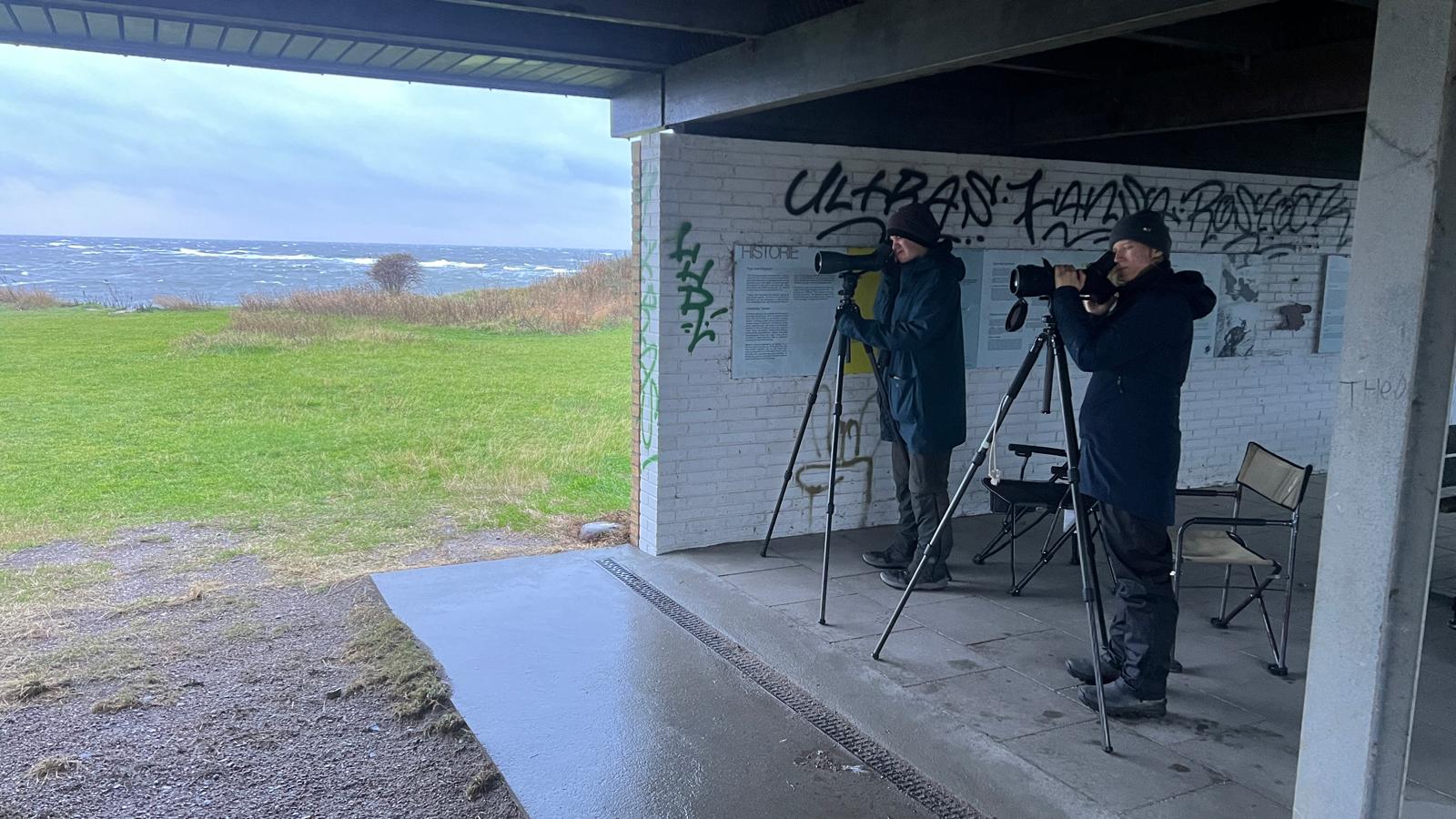
The old navy station is incredibly helpful by protecting from the strong winds and rain. Here, we could have an actually decent morning and it wasn't too cold. Photo: Børge Langkilde
Far out at sea, something changed. Suddenly, big flocks of Common Eiders (Somateria mollissima, "very soft wool-body") appeared and for some reason migrated against the wind. Their good migration was very surprising to us and made hope for more. In total, we counted 4.734 Eiders, today mostly males. This number makes up more than 90 % of all birds counted today. The Eiders were joined by other ducks, especially Eurasian Wigeons (Mareca penelope, "Penelope's small duck") and Common Scoters (Melanitta nigra, "black black duck").
In the strong wind, we mostly hoped for typically pelagic birds that get blown closer to shore. Alba was very sad about not seeing her big wish, a Sabine's Gull (Xema sabini, "Joseph Sabine's xema [invented name]"). Other than that, we got almost all our wishes though. Together with some Eiders came a huge white bird that was quickly identified as a Northern Gannet (Morus bassanus "idiot from bass rock") - see yesterday's blog for more on that species. An adult light morph Arctic Skua (Stercorarius parasiticus, "the parasitic one from the dung") came very close to the shore and left no doubts on its identification. This was definitely one of the closest Skuas anyone of us has ever seen! Over the course of the count we could also see two small black-and-white birds with very quick wingbeats. One of them turned ot to be a Common Murre (Uria aalge, "auk waterbird"), the other one was a Razorbill (Alca torda, "auk auk"), the closest living relative of the true penguin. All species of auks are quite rare here in Gedser as they prefer more open water. In strong winds though, it is more likely to see them.
Gulls too had a nice day. Not only the Herring Gulls migrated, especially Common Gulls (Larus canus, "grey gull") came by in good numbers too. Continuing the theme of very close birds was a small group of Little Gulls (Hydrocoloeus minutus, "little water-jackdaw"). This allowed us to take a close look at their wings. Adult Little Gulls have jet black underwings that rend them an unmistakable look. The young ones have black feathers on top of the wing that form a "w". These birds have to be one of my favourite gull species!
Fugle registreret i standardtiden: 5.259 . Arter: 29. Tællingen startet 06:30, sluttet klokken 11:30.
Se alle dagens observationer på Gedser Odde i DOFbasen.
På stationen: Alba M. Holmberg, Børge Langkilde, Marek Ebert
Gannets for breakfast
Ringmærkning: Med stærke vinde fra syd var vi ikke sikre på, hvorvidt vi overhovedet ville kunne stable en standard-mærkning på benene her til morges, men vi endte dog med at kunne åbne nok net.
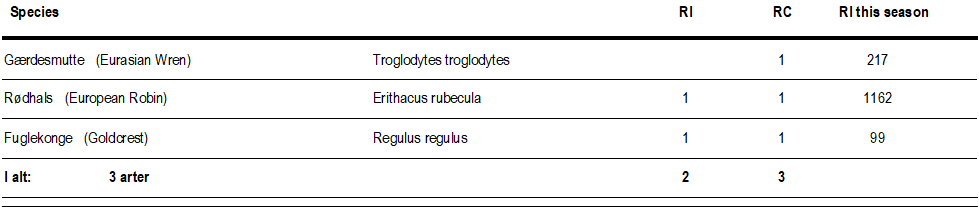
Og det var godt at vi kunne, for i løbet af standard-tid fangede vi en helt masse: Flere tusinde blade røg ihærdigt i nettene, ofte så hurtigt at vi ikke kunne få visse net helt blad-fri, selv når både Børge og jeg aktivt pillede dem ud. Vi fik derudover fornøjelsen af en lille kvist med tre ellekogler, som viklede sig rigtigt godt ind i et af nettene, og som jeg måtte pille i stykker for at kunne få ud. En sjælden gang imellem sad der også et lille væsen med næb, klør og befjerede vinger i et net, og disse pillede vi mere forsigtigt ud og tog lidt mere data på end alle bladende. Det endte med at blive til 5 af disse små mærkværdige bæster, hvoraf 3 allerede havde en af de små metal-ringe, vi sætter på deres små ben, på, mens vi selv måtte sætte ringe på de resterende 2.
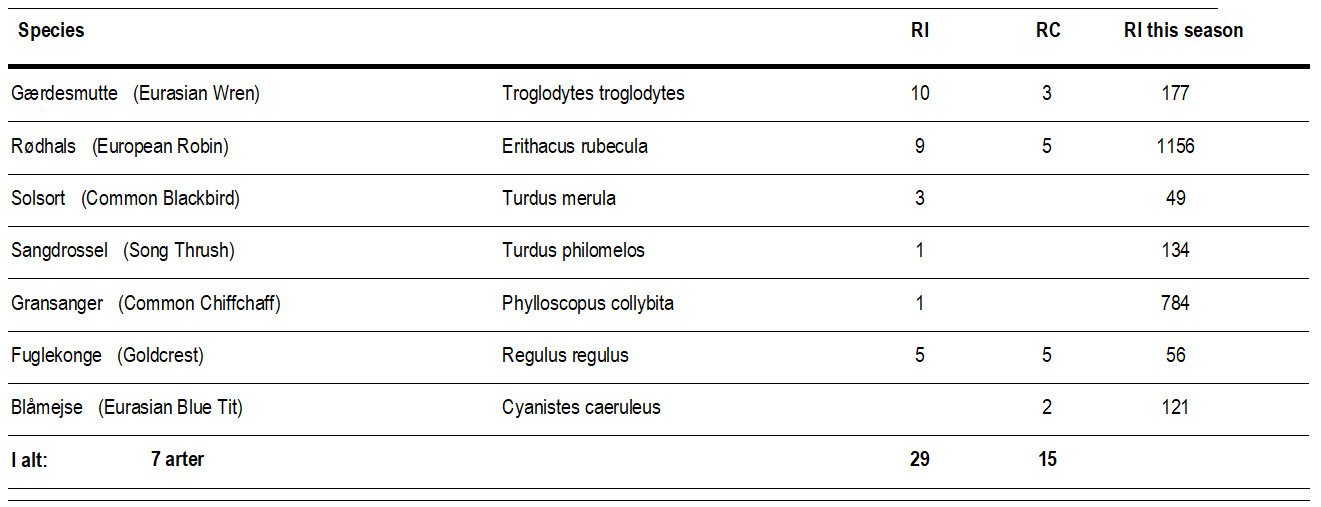
Disse små væsner, kaldet "fugle", kan inddeles yderligere i forskellige arter baseret på deres form og udseende, hvilket vi selvfølgelig også gjorde som del af de data vi tog på dem. To af fuglene var meget små og spinkle med en mærkværdig gul stribe oven på hovedet, og disse hørte til arten "Fuglekonge" (Regulus regulus). Vi fangede også en fugl, som var lille og kompakt med spættede brune farver, som er en såkaldt "Gærdesmutte" (Troglodytes troglodytes), samt to lidt større brunlige fugle med store rødlige mærker på deres hals/bryst, kaldet "Rødhalse" (Erithacus rubecula). Vi fik også mulighed for at vise at par af disse væsner frem for Mads og Tina, samt to af deres venner, som kom på besøg.
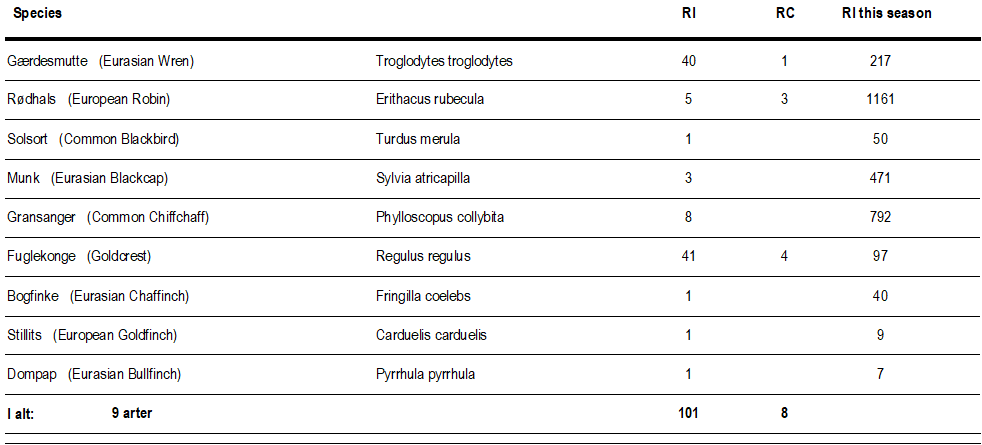
Fangsterne af fugle er opsummerede i tabellen herunder:
Trækket på Odden: In today's very stormy weather out at the tip, I was not the only one to look for a sheltered place and just stay there. Most birds did the same. While I yesterday had thousands upon thousands of small passerines flying over me and heading towards Germany, it was a total of 17 individuals today! A few more also came towards the tip, tested the winds and decided not to migrate today and instead have a cozy morning in the bush at the tip. Especially nice were three Yellowhammers (Emberiza citrinella, "small yellow bunting"), perching on top of the bush and allowing for great views and even pictures through the scope.
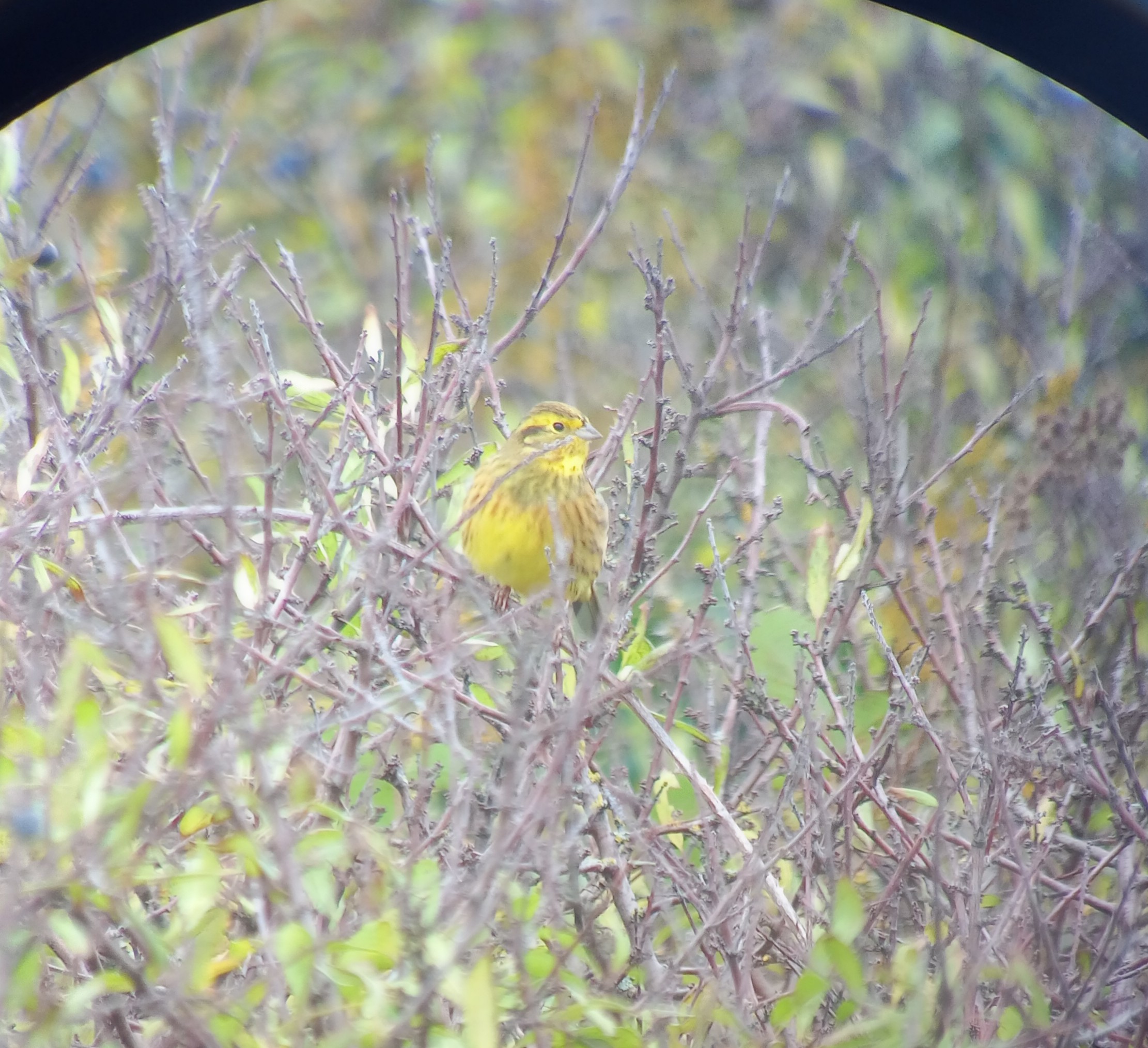
An especially yellow Yellowhammer. Based on this intense colouring, this bird is most likely an adult (2k+) male. Yellowhammers are partially migratory; some fly south and others stay in northern Europe for the winter. They can be seen in big flocks in the fields and also sometimes visit birdfeeders.
On the water too, very few birds were migrating. Common Eiders (Somateria mollissima, "very soft wool-body") and Eurasian Wigeons (Mareca penelope, "Penelope's small duck") comprised the biggest proportions of migrating waterfowl, but they too only came in small numbers. It is interesting to see the gender shift in the Eiders: When I first counted migration in September, it was almost a sensation to see a female type in the flocks. Now, it is almost equal, even slightly tipped towards the female type birds. But this shift is expected and reflects their typical migration patterns. Speaking of migrating waterfowl, almost all of the Barnacle Geese (Branta leucopsis, "white-cheeked burning-goose") from the fields left. In the last days, huge flocks of several thousand birds would periodically fly up and settle down again. Today, only about 500 bird were present on all fields combined.
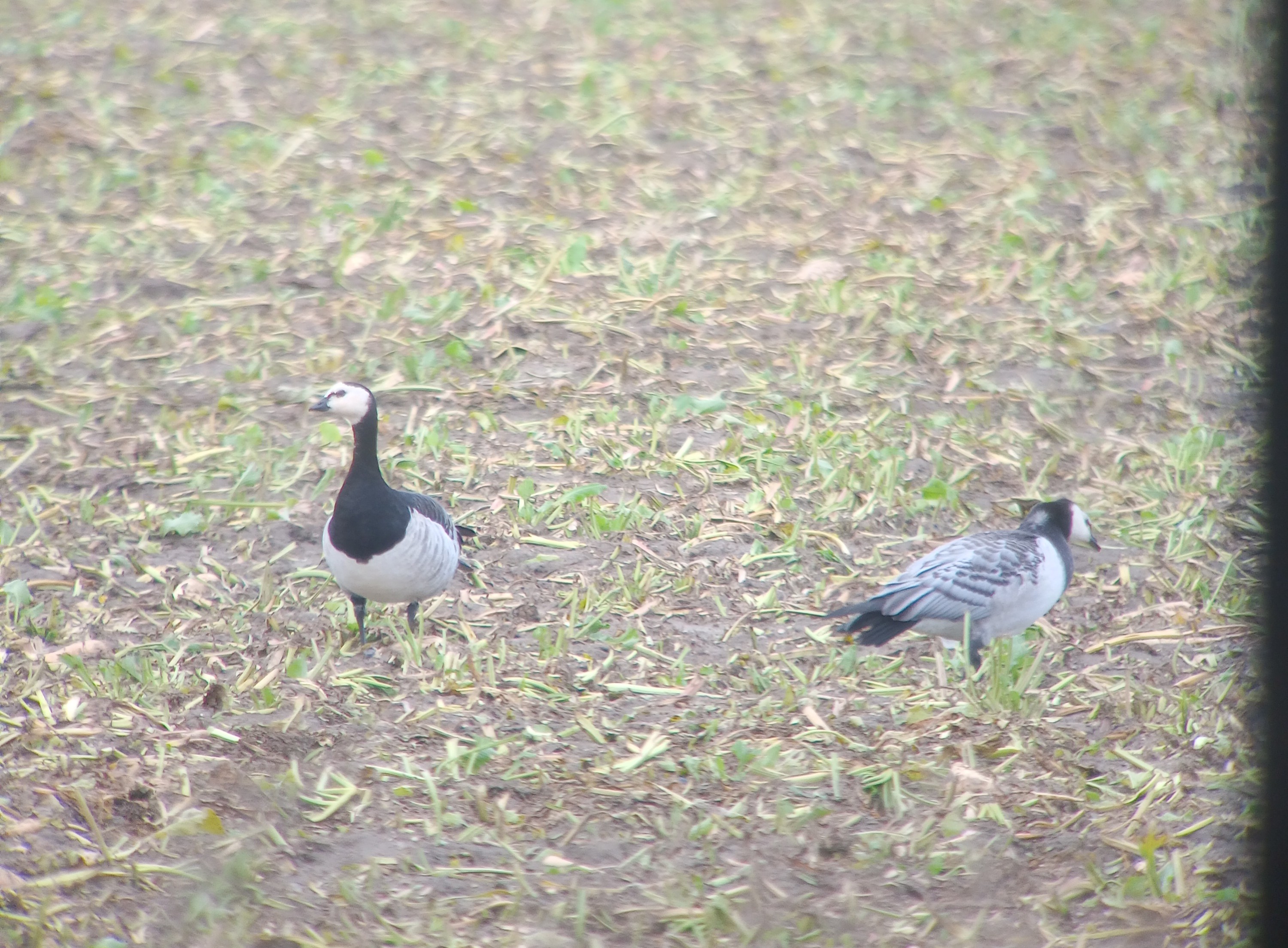
Two of the four Barnacle Geese left on the field closest to the tip. They feed on the leftover sugar beets and other remainders from this year's harvest.
But whoever says that the marine migration did not yield anything special today would be an idiot, even more than the bird I am talking about. A total of six Northern Gannets (Morus bassanus, "idiot from bass rock") migrated by. This is pretty special for Gedser, as these birds are usually in more open waters. The next breeding colonies are found on Helgoland and the Norwegian coast. So these Gannets must have already had quite a trip behind them. Furthermore, they all seemed to be adults (5k+), as I could not see any black feathers outside of where they are supposed to be. These biggets seabirds of the northern Atlantic can migrate far outside of breeding season.
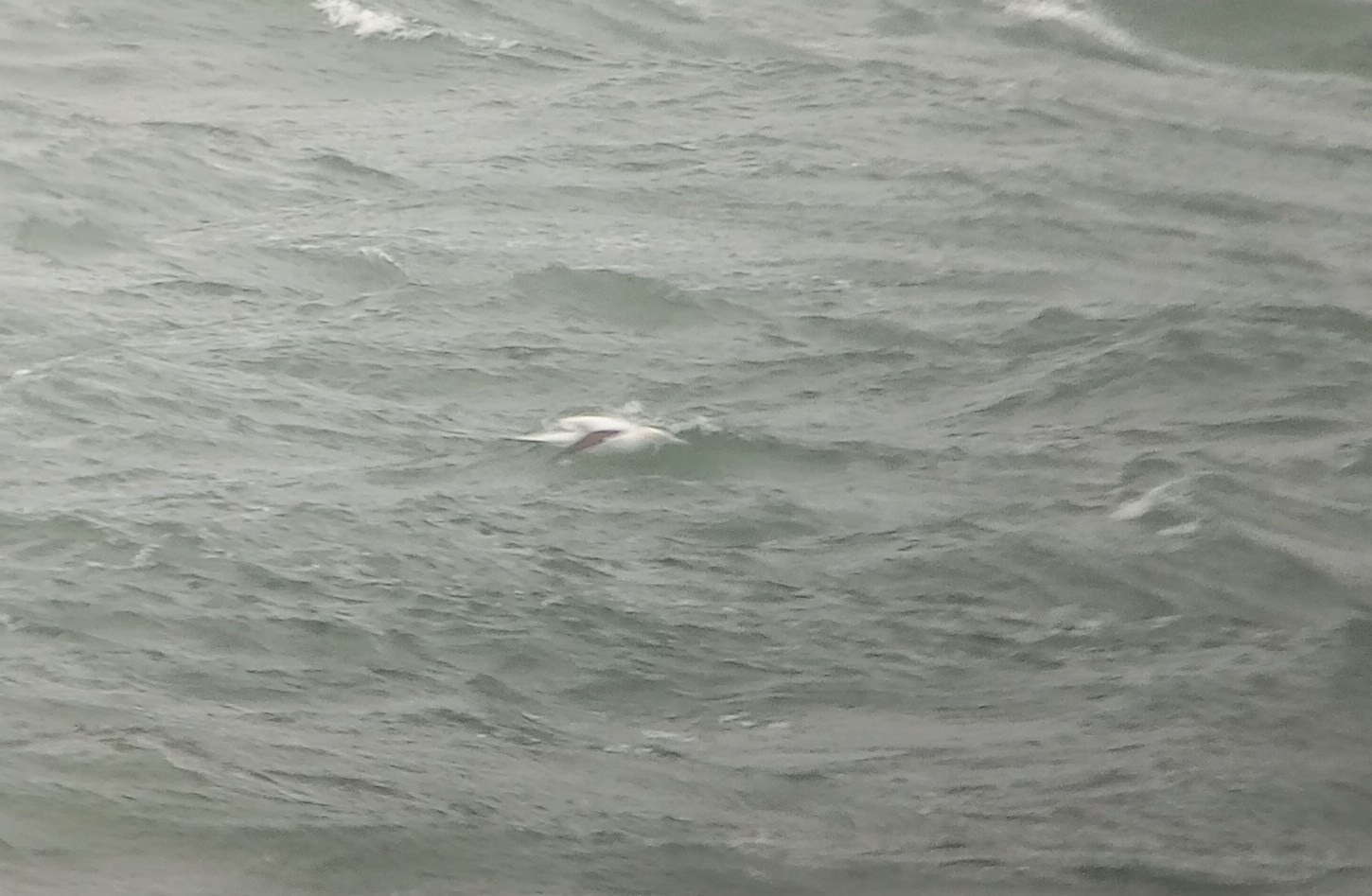
Not only the scientific name insults these birds as idiots, in German it is known as clumsy, in French as insane and the Poles call it a "silly goose". This origins in this bird's awkward movement on land. In the air though, they are nothing but elegant. On their long and slender wings, Gannets can glide quickly over the sea. When they spot prey, Gannets will fly up and plunge-dive with speeds of up to 100 km/h into the water where they use their feets and wings to dive even deeper.
Another nice surprise was a visit by Mads and Tina, some of the very few people I have seen this morning at the tip. They actually came at the exact right time to see one of the Gannets fly by.
Fugle registreret i standardtiden: 879 . Arter: 24. Tællingen startet 07:28, sluttet klokken 12:28.
Se alle dagens observationer på Gedser Odde i DOFbasen.
På stationen: Alba M. Holmberg, Børge Langkilde, Marek Ebert, Mads Elley og Tina Elley + to af deres venner, som kom på kort besøg.
All the passerines you could imagine
Ringmærkning: I ringmærker-verdenen er Gærdesmutter (Troglodytes troglodytes) berygtede for at være meget besværlige fugle at arbejde med. De er små og relativt stærke, samt meget adrette, og vil udnytte enhver åbning man giver dem til at undslippe ens greb. Derudover har de en tendens til at vikle sig rigtigt godt ind i nettene, hvor de kan danne såkaldte "snurretoppe" ved at snurre rigtigt mange gange rundt i nettet, samt "lommme-forvirring", hvor de enten vikler sig ind i flere lommer på en gang eller svinger rundt i lommen så fuglen effektivt set bliver helt omringet af net. Kort sagt kræver Gærdesmutten skapt fokus, og den kan være lidt frustrerende at arbejde med.
Derfor var det for mig en meget stor fornøjelse, da vi i morges blev mødt af næsten 30 Gærdesmutter i vores net på første runde! Heldigvis var de fleste relativt nemme at ekstrahere, men der var et par stykker som gav mig lidt problemer. Ud over Gærdesmutterne fangede vi også en masse Fuglekonger (Regulus regulus), som endte med at blive vores hyppigste art for dagen, med hele 41 nye mærkninger og 4 genfangster.
Efter de første to runder stildnede fuglepresset drastisk af, og på runde nummer tre var der kun 4 fugle i nettene, hvilket var en drastisk ændring fra de 60 vi havde i den allerførste. Sådan blev det også ved resten af dagen, hvor vi fangede mellem 0 og 4 fugle per runde, indtil vi nåede den sidste. På lukkerunden sad der nemlig pludseligt hele 5 fugle i et af hejsenettene, blandt andet en Bogfinke (Fringilla coelebs) og en Stillits (Carduelis carduelis). På samme runde havde vi også fanget en fin hun Dompap (Pyrrhula pyrrhula), så dagen blev rundet af på meget fin vis. Da det var Philips sidste dag på stationen i denne omgang, fik han lov at ringmærke Bogfinken, Stillitsen og Dompappen.
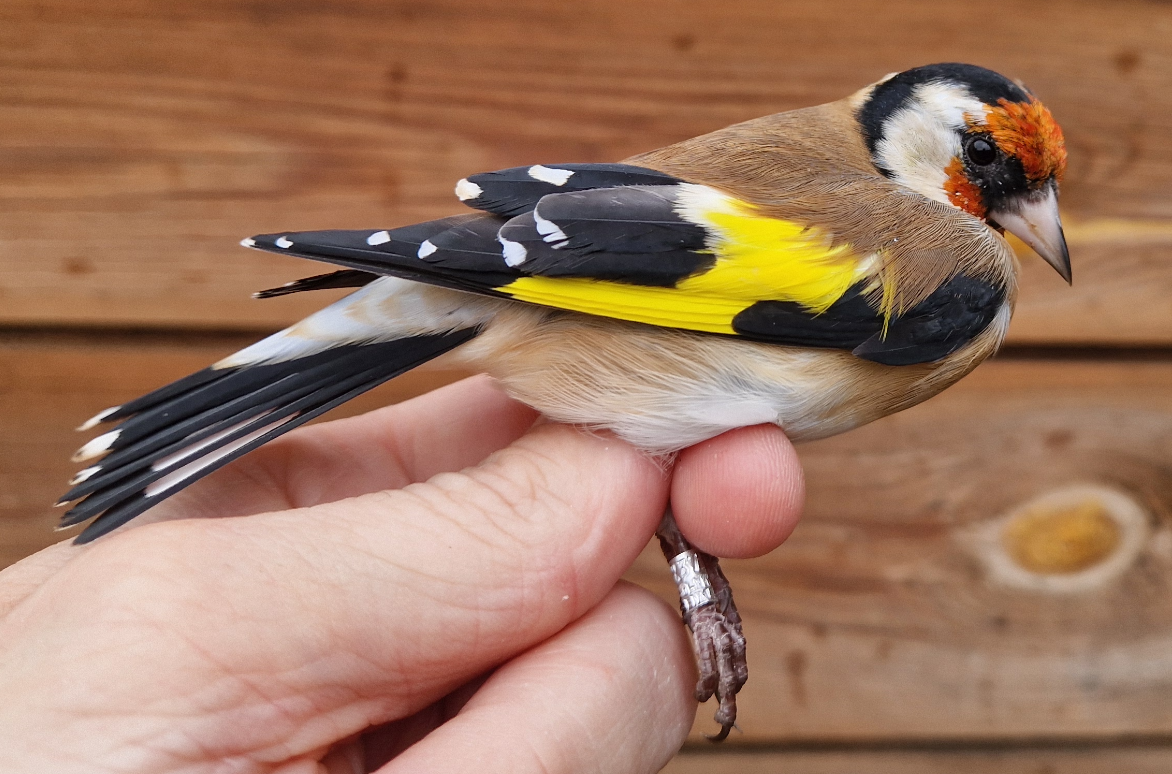
En ung Stillits, en af de sidste fugle for dagen. Foto: Philip Elbek.
I alt endte vi med 110 fangster fordelt på 101 nye ringmærkninger og 9 genfangster, hvoraf Fuglekongerne og Gærdesmutterne tilsammen udgør langst størstedelen. Det er meget dejligt at se, at der er begyndt at komme bedre gang i Fuglekongetrækket som ellers har haft sine højdepunkter tidligere i sæsonen. Men denne forsinkelse stemmer meget godt overens med en generel forsinkelse i fugletrækket i forhold til tidligere år, som vi har observeret i løbet af hele sæsonen.
Dagens fangster:
Trækket på Odden: After a very dreary couple of days it was very nice to actually see the sun rise today. This also made the count much warmer and way more enjoyable, seemingly also for the birds.
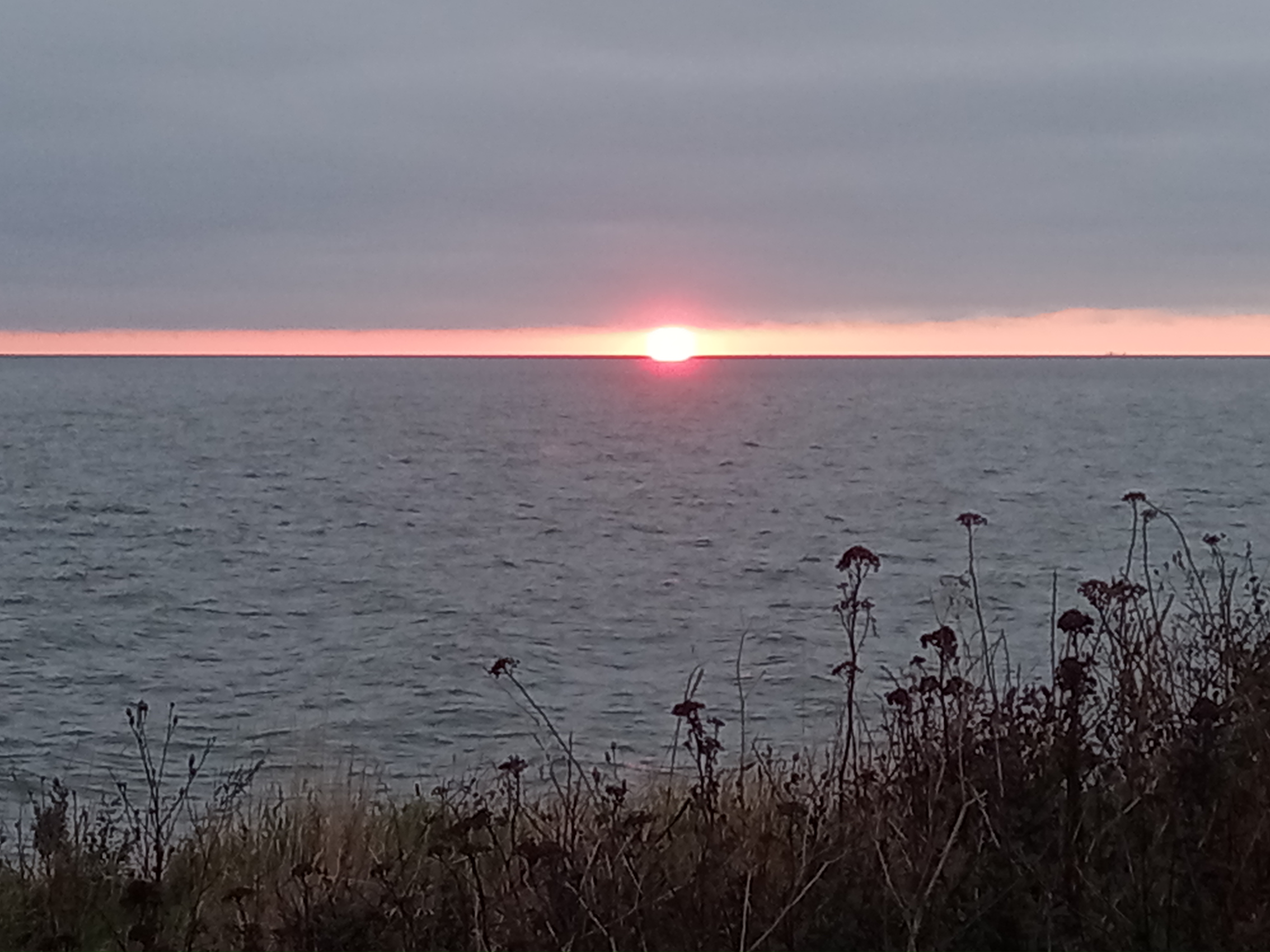
Here comes the sun! After many dark and grey days, today a sunrise was actually visible.
Already within the first half hour, usually the most quiet time, I had close to 500 birds. Most active were the finches, especially Eurasian Siskins (Spinus spinus, "siskin") and European Goldfinches (Carduelis carduelis, "goldfinch"). Both species reached a new record for the season today (2300 and 1091, respectively). Another surprisingly active species were the Redpolls (Acanthis flammea, "flame-coloured redpoll"). I only recently learned their flight calls, so today was a great opportunity for practice. Apart from finches, also corvids had a great day. There were several big flocks of Western Jackdaws (Coloeus monedula, "small money-jackdaw"), with their characteristic calls, and Rooks (Corvus frugilegius, "fruit-gathering raven"). In fact, we saw a lot of corvid species, including three Northern Nutcrackers (Nucifraga caryocatactes macrorhynchos, "big-billed, core-destroying nutcracker").
What’s that? It is etymology time! After hearing its warbling call, we could quickly also see a Wood Lark (Lullula arborea, "»lulu«-sounding bird from the trees"). In German, this bird is known as "Heidelerche" ("heath lark") or "Baumlerche" ("tree lark"). The latter name is so nice that the Danish language adopted it and put it to use on a totally different and completely unrelated bird: Bomlærke - the Corn Bunting (Emberiza calandra, "calandra-lark bunting"). Two of these huge buntings also showed up today and let their machine gun calls sound before turning back. To summarise: There is a bunting that got its Danish name from a lark and its scientific name from a different lark. What is this? As there are more passerines that deserve mentioning and I am out of ideas, here just the names in no particular order: a late Barn Swallow (Hirundo rustica, "countryside swallow"), a Great Grey Shrike (Lanius excubitor, "watchman butcher"), several Grey Wagtails (Motacilla cinerea, "ashy-grey moving-tail") and Twites (Linaria flavirostris, "yellow-billed linen-weaver").
Attentive readers might have noticed that I did not speak at all about the migration at sea. That is because there was almost none. A few ducks came past, but often just one flock per species. Neither numbers nor species were particulaly interesting. One specific individual deserves mention though: today is the one-month-anniversary of our favourite Black Scoter (Melanitta americana, "american black duck"). Happy rarity-versary! It seems to be doing well and also showed itself today particularly well.
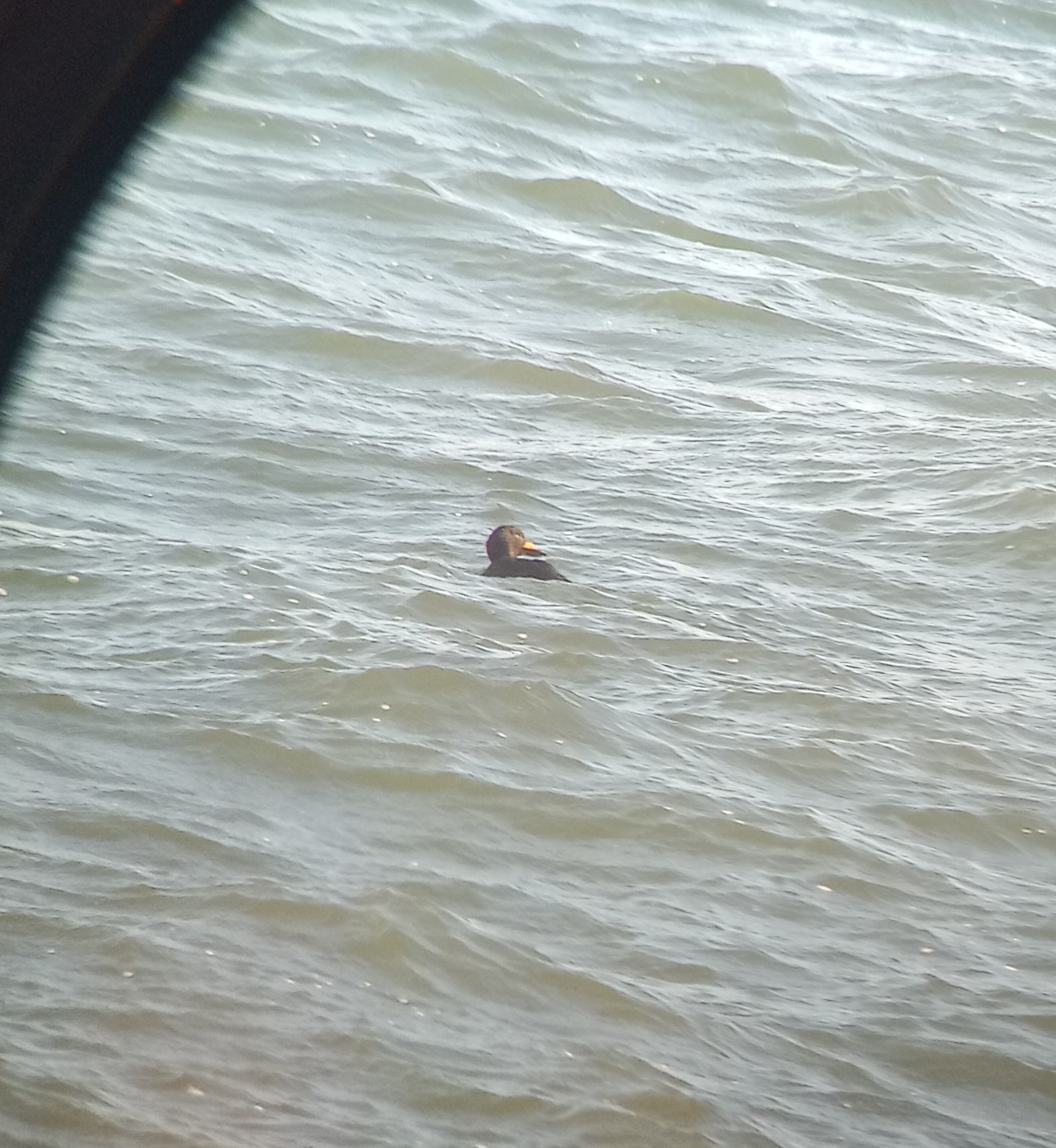
It’s time to celebrate! Exactly one month ago, this bird's bright orange knob was first spotted.
Fugle registreret i standardtiden: 6.197 . Arter: 48. Tællingen startet 07:26, sluttet klokken 12:26.
Se alle dagens observationer på Gedser Odde i DOFbasen.
På stationen: Alba M. Holmberg, Philip Elbek, Børge Langkilde, Ole Friis Larsen, Marek Ebert
Der findes trods alt modige Stillitser
Ringmærkningen: Det var heldigvis muligt at holde en standard i dag og nette gav da også lidt i de første par timer. Et par blåmejser (Cyanistes caeruleus), der blev ringmærket som helt små i sommers, blev genfanget og en sen munk (Sylvia atricapilla) røg i nettet.
Vi havde også en nøddekrige (Nucifraga caryocatactes) som satte sig kortvarrigt i haven, men den ville desværre ikke fanges i denne omgang.
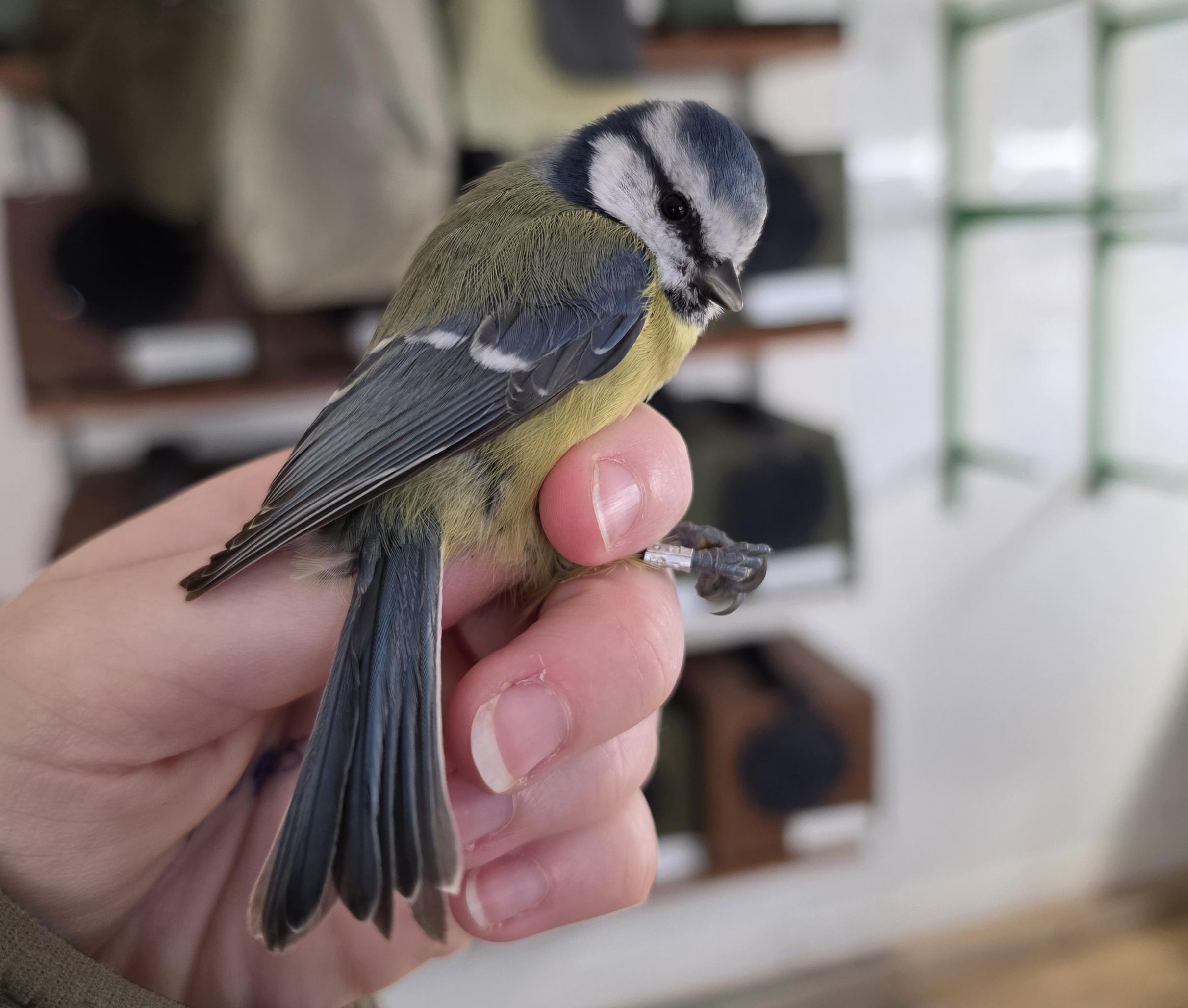
En ung blåmejse som har været i haven i 3 måneder. Foto: Signe Agermose
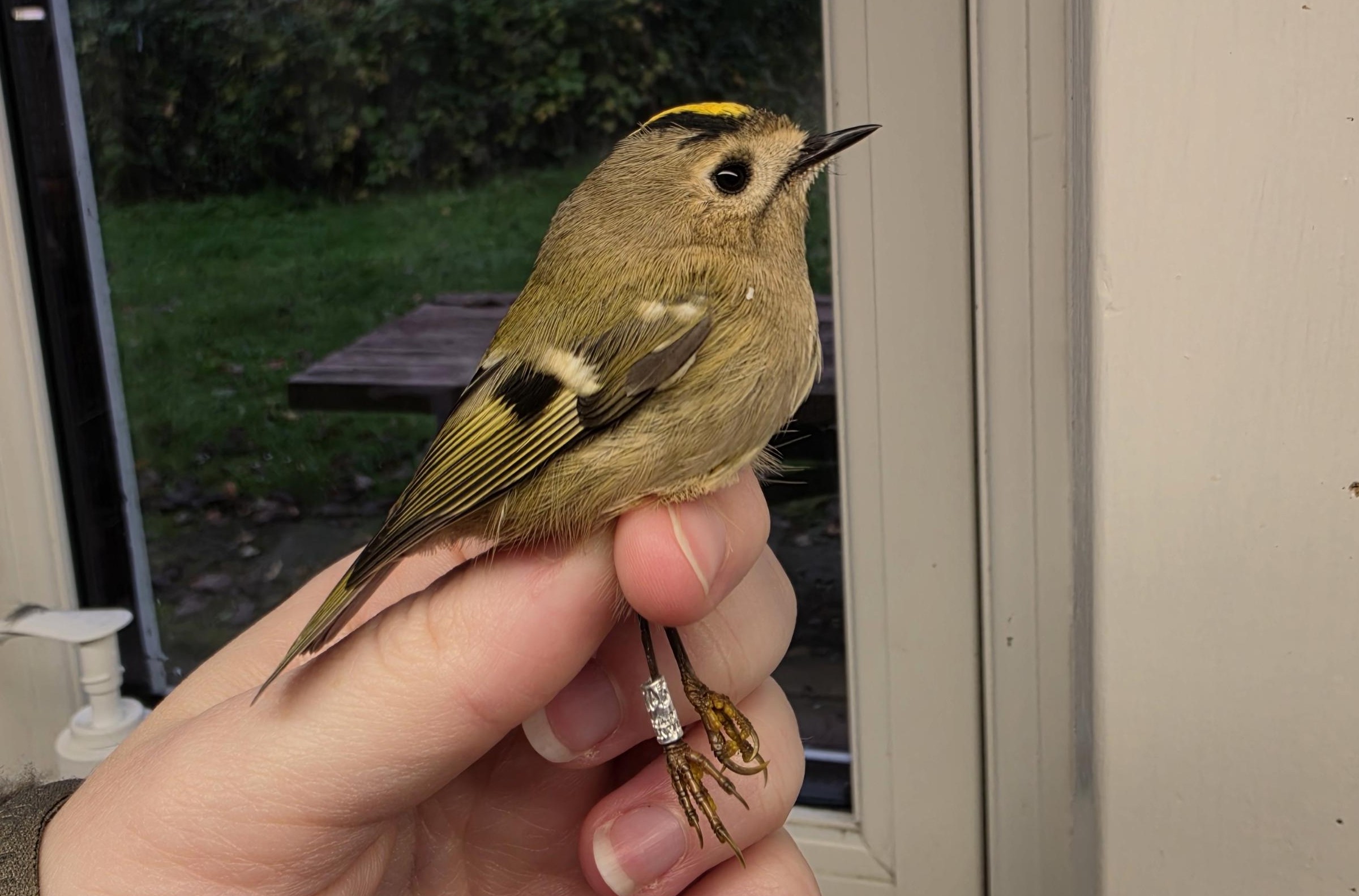
Fuglekonge; en af Danmarks mindste fugle med en vægt på 5,5 gram. Foto: Signe Agermose
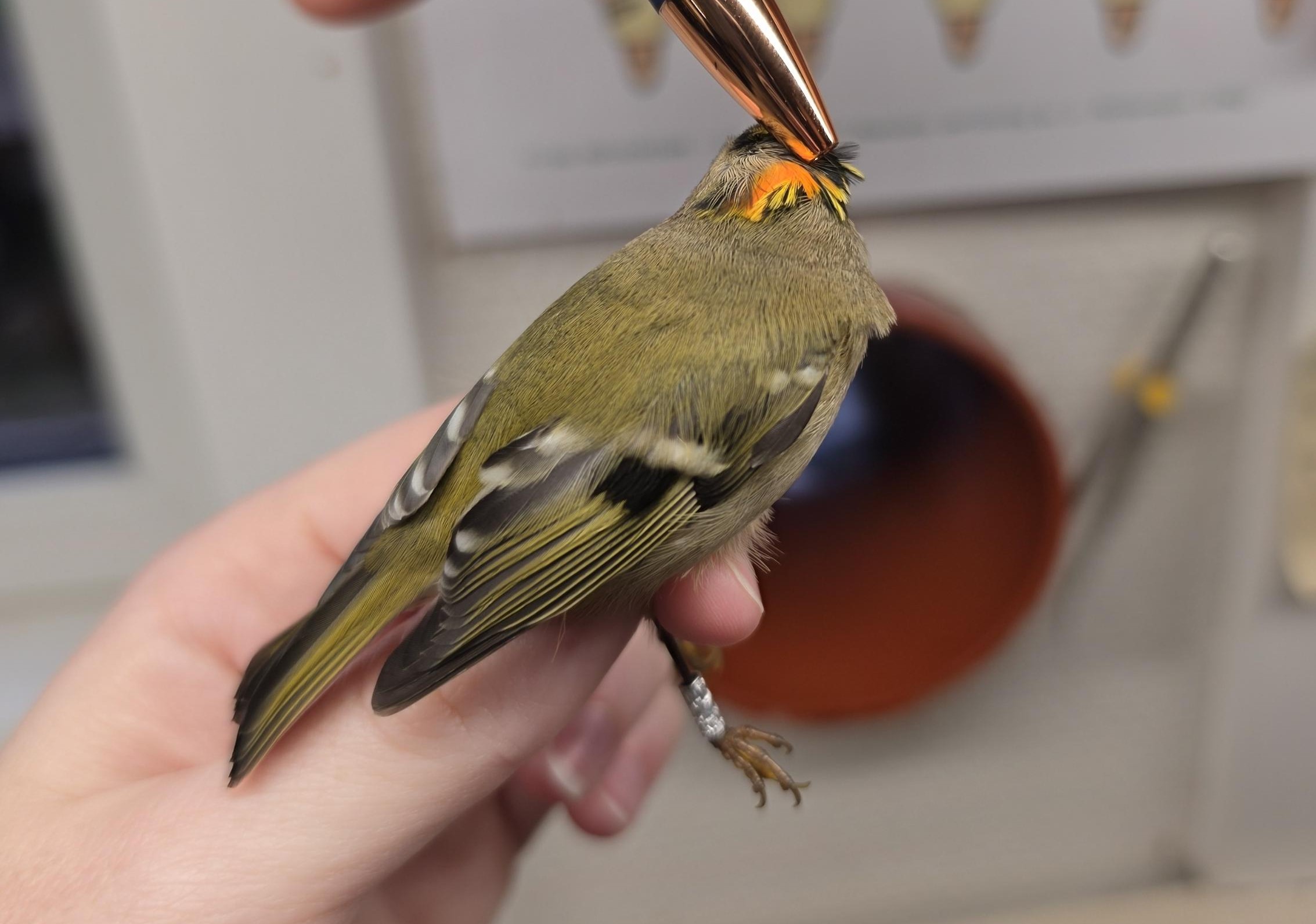
Fuglekongen kan nemt kønsbestemmes i hånden. Det en hun hvis kronen er gul, og en han hvis kronen er orange (som denne). Foto: Signe Agermose
Trækket på Odden: ”Se lige den flok Stillitser; de har fået to Grønsiskener med i flokken for at komme ud over havet, men Grønsiskenerne fortsætter, og Stillitserne tør ikke følge med alligevel”, konstaterede Marek torsdag morgen, da vi stod helt ude ved på spidsen af landets sydligste punkt og registrerede dagens træk, som mest foregik under en overskyet himmel og med vind fra sydvest op til 11,3 meter i sekundet. Det var ikke noget vejr for Stillitser (Carduelis carduelis), men ok for Grønsiskenerne (Spinus spinus), to arter af finker med omtrent samme størrelse. Den forskel har vi ofte set i efterårstællingerne. I løbet af standardtiden var der alligevel 263 Stillitser, der tog chancen, mens siskenerne løb op i 520 udtrækkende og blev dagens mest talrige småfugl på træk.
Og som en gestus til Marebs fine ide med at forklare betydningen af fuglenes navne: Ordet sisken i det danske fuglenavn Grønsisken kommer fra sisek, et slavisk ord, som er en lydefterligning af fuglens stemme. Den slaviske forbindelse passer i øvrigt fint med Falster, hvor der er flere stednavne af slavisk oprindelse. Måske er ordet netop kommet ind i dansk i omegnen af Gedser Fuglestation.
 Nogle af dagens Blisgæs. Vi kan ofte bestemme dem på lang afstand på deres hvide blis, men tættere på og i godt lys er det også til at se de kraftige mørke tværbånd, som kun de adulte/voksne fugle har. Foto: Ole Friis Larsen/GFU
Trækket over havet var domineret af gæs med flokke af Blisgæs (Anser albifrons) som dem, der fyldte mest, selv om 380 af dem rent talmæssigt ikke kunne overgå dagens mere beskedne træk af Ederfugle (Somateria mollissima) på 413.
Værd at nævne er også, at det klarede en del op den sidste time af standardtiden, og forekomsten af blå himmel oppe over skyerne udløste nærmest omgående et træk af rovfugle med hele fem Fjeldvåger (Buteo lagopus) på udtræk samt et par stykker, der gav op, to Røde Glenter (Milvus milvus) og 42 Spurvehøge (Accipiter nisus). Mere dristig forekom en voksen/adult han Blå Kærhøg (Circus cyaneus) at være. Den opdagede vi ude over bølgerne, mens det stadig var tæt overskyet.
 Den ene af dagens to Røde Glenter var med sikkerhed adult/voksen og dermed en erfaren trækfugl. Her viser den tydeligt de fleste kendetegn for en voksen Rød Glente, nemlig lyst øje, klar kontrast mellem lys underside på halen og rød undergump samt kraftige mørke striber på undersiden af kroppen. Foto: Ole Friis Larsen/GFU
Fugle registreret i standardtiden: 2.963 . Arter: 58. Tællingen startet 07:23, sluttet klokken 12:23.
Se alle dagens observationer på Gedser Odde i DOFbasen.
På stationen: Alba M. Holmberg, Signe Agermose Andersen, Philip Elbek, Leander, Børge Langkilde, Ole Friis Larsen, Marek Ebert
Fornemt besøg
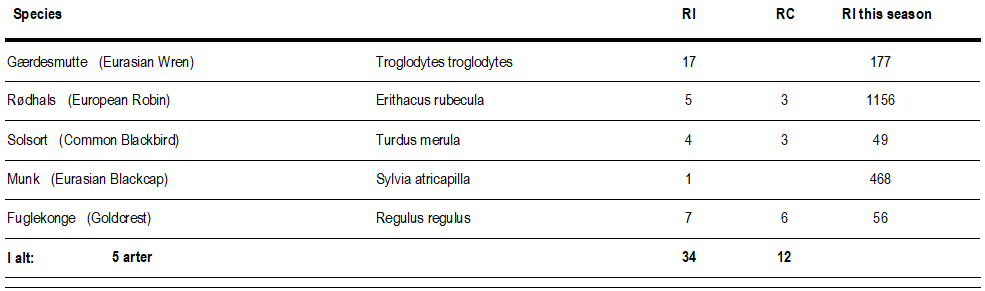
Ringmærkningen: I dag markerede en meget vigtig dag for os frivillige på Gedser Fuglestation. For det første var det Signes fødselsdag (tillykke!!!), og for det andet kom Guldborgsunds borgmester, Simon Hansen, på besøg fra kl. 8 for at se ringmærkning. Han havde rigtig god timing, da der kort efter hans besøg begyndte at regne, så vi blev nødt til at lukke alle vores net igen. I den tid vi havde nettene åbne nåede han at se arter såsom Solsort (Turdus merula), Gærdesmutte (Troglodytes troglodytes) og Fuglekonge (Regulus regulus) blive ringmærket, samt set hvordan vi fanger og ekstraherer fuglene i vores spejlnet.
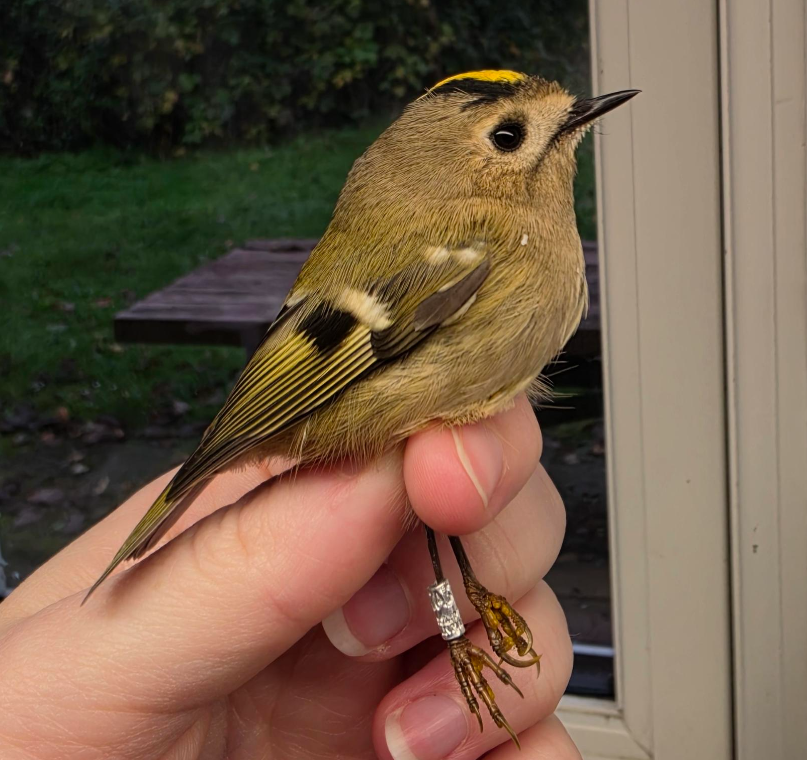
En af dagens fine små Fuglekonger. Foto: Signe Agermose.
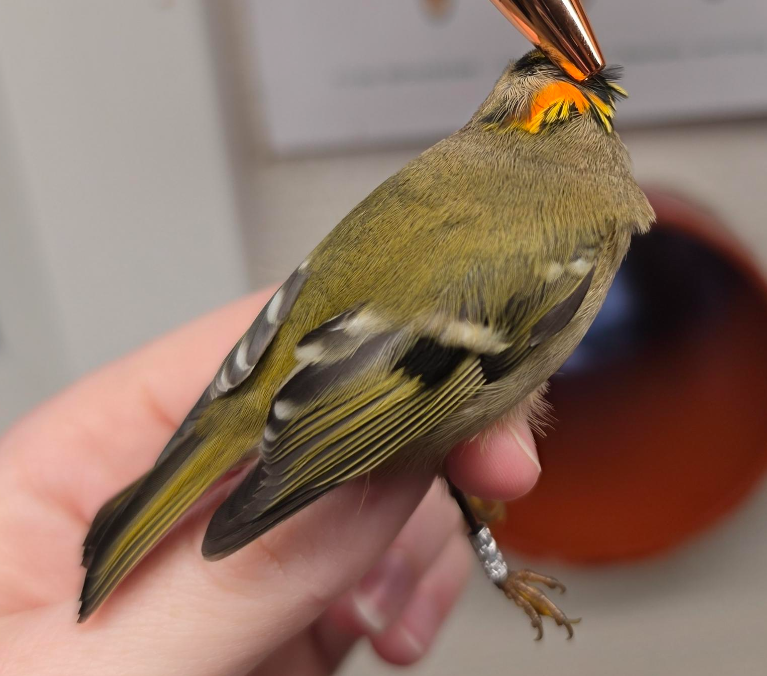
Fuglekonger af begge køn har en ydre kron-top som er gul, men hannernes kron-fjer gemmer på orange farver, mens hunnernes kron-fjer er helt gule. Her vises det orange på en ung Fuglekonge-han (samme individ som forige billede). Foto: Signe Agermose.
Kort efter lukning af nettene havde vi håb om, at vi måske kunne redde standard (vi må gerne have nettene nede I maks en time hvis der fx. regner), da det på radaren så ud som om at regnvejret kun ville vare I ca. en time, men regnskyen blev ved med at vokse, og der endte med at gå hele 5 timer, inden vi kunne åbne net igen, og selv da blev vi nødt til at lukke igen efter ca. en time.
Trods vi kun ringmærkede I ca. tre en halv time totalt, nåede vi dog at få et relativt godt antal fugle, med 34 nye ringmærkninger og 12 genfangster. Jeg kunne desværre ikke skaffe Signe en Nøddekrige (Nucifraga caryocatactes) I fødselsdagsgave som jeg ellers havde håbet, men sådan er det med ringmærkning; det hele foregår på fuglenes vilkår, så man ved aldrig helt, hvad man kommer til at fange. Til gengæld sang vi fugle-fødselsdagssang for Signe efter aftensmaden, hvor vi forsøgte at lyde som hhv. en Gærdesmutte, en Fiskeørn (Pandion haliaetus), og en Slørugle (Tyto alba), til meget blandede resultater.
Dagens fangster:
Trækket på Odden: En morgen præget af regn og beskedent træk i det meste af standardtiden. De to forhold hænger ikke nødvendigvis sammen, men sådan var det denne onsdag. Det er alligevel vigtigt for os at være ude at tælle i al slags vejr for at indsamle viden om trækket, og hvordan det påvirkes af forskellige vejrforhold. Heldigvis kan vi stadig arbejde i ly for regn på Gedser Odde.
I trækket har vi i de seneste dage bemærket en større andel af Gråænder (Anas platyrhynchos). Mange er tilbøjelige til at rynke på næsen og nedgøre Gråænder som parkænder eller skydeænder, men der er ægte vilde Gråænder, som yngler dybt inde i storslåede naturområder og trækker langt om efteråret. For os, der tæller, er det altid en glæde at opleve Gråænder på træk i selvstændige flokke eller i flok med andre arter af svømmeænder.
 Bramgæs finder knuste rester af roer på marken ved Odden. Fordelen ved at være mange sammen er, at der altid er nogen der holder øje med omgivelserne. Foto: Ole Friis Larsen/GFU
Mens Spurvehøgene (Accipiter nisus) og en kærhøg hurtigt opgav at flyve ud over havet og vendte om, at der til gengæld en del Bramgæs (Branta leucopsis), som landede på marken ved Odden for at æde sig mætte i de rester af sukkerroer, der er tilbage efter høsten. Vi kiggede flokkene igennem for at se, om der skulle være andre arter imellem, eller nogle af dem havde farveringe eller gps-sendere. Det var også dejligt at se, hvor lidt sky de mange gæs var over for turister med hunde på vejen mellem p-pladsen og spidsen af Odden. Fugle kan sagtens vænne sig til mennesker, som lader dem være i fred.
 Amerikansk Sortand i regnvejr onsdag morgen. Den kommer ikke tæt nok på til skarpe billeder, men det er let at se den karakteristiske store orange knop på næbbet, som adskiller den fra de almindelige Sortænder (Melanitta nigra), som har en anden knopform med andre farver. Foto: Ole Friis Larsen/GFU
En Amerikansk Sortand (Melanitta americana) har været i det samme område tæt på kysten ved Gedser Odde i mindst en måned. Den blev opdaget af en deltager i et højskolekursus og fotograferet af Gedser Fuglestations træktællerhold 23. september. Nogle fotos viste, at fjerene på vingerne var i dårlig stand, og den kunne formentlig ikke flyve. Det er sikkert forklaringen på, at den har været så længe i området, mens den er i fældning og venter på at få nye svingfjer. Vi ser den sjældne gæst næsten hver dag. Vi anser den for en voksen han på grund af udseendet og fjerdragten, men noget litteratur tyder på, at den kan bestemmes nærmere til en et år gammel han (2k, andet kalenderår). Den sorte fugl med den store, næsten selvlysende orange knop på næbbet ser ud til at trives fint. Den dykker ivrigt og har holdt sig i live i en måned; det tyder ikke på olieskader eller andre problemer med helbredet. Det er normalt for mange arter af ænder, at de opsøger et sikkert sted med rigelig mad, indtil de har skiftet svingfjerene og kan flyve igen.
Fugle registreret i standardtiden: 3.087. Arter: 42. Tællingen startet 07:21, sluttet klokken 12:21.
Se alle dagens observationer på Gedser Odde i DOFbasen.
 Når aftensmaden bliver til en rund fødselsdagsfest. Signe er en af vores faste frivillige på fuglestationen, og sammen med Philip har hun vist os, at børnefamilier sagtens kan deltage i ringmærkningen. Vi fejrede hende med fødselsdagssang, og Alba havde lavet en kage til dessert. Foto: Ole Friis Larsen/GFU
På stationen: Alba M. Holmberg, Signe Agermose Andersen, Philip Elbek, Leander, Børge Langkilde, Ole Friis Larsen, Marek Ebert, Mads Elley, Tina Elley + fotografen Jan Johannesen
One swallow does make the winter
Ringmærkningen: Det blev til en relativt rolig morgen på ringmærkningen. Grundet regn måtte vi udskyde dagens ringmærkning og først åbne net kl 9.15. Heldigvis lykkedes det, trods vind og vejr, at gennemføre de 5 standardiserede timer - og lidt fugle fik vi da gennem hænderne!
Blandt andet fik vi genbesøg af en gråsisken (Acanthis flammea), som også var forbi nettene i går. De er ikke helt lige så nuttede og skønne som halemejser, men det er godt nok tæt på! Skøn fugl.
 Gråsisken, ung fugl i sit første leveår (1k). Den kunne ikke kønsbestemmes på nuværende tidspunkt. Foto: Signe Agermose.
Vi fik også besøg af en ung blåmejse (Cyanistes caeruleus) som havde en rigtig fin fældningsgrænse i sin hale. På billedet herunder kan det ses, at fuglen havde udskiftet sine midterste halefjer. De yderste juvenile halefjer er grå, spidse og relativt slidte mens de nye midterste halefjer er meget mere blå, afrundede og friske.
 Hale på en blåmejse som er klækket i år. Billededet viser fældninggrænse mellem centrale fjer som er nye og friske og ydre fjer som er ældre og stadig mangler at blive udskiftet. Foto: Signe Agermose.
Vi håber, at I morgen bliver en smule mere spændende og måske bringer mig en lille fødselsdagsgave - måske i form af et højere antal fugle eller hvis vi er rigtig heldige, en nøddekrige! Vi krydser fingre.
Dagens mærkninger og genfangster:
Trækket på Odden: Today, Ole could not be out at the tip, so I was responsible for the counting. Luckily, I did not have to endure the miserably weather all on my own – my father joined me. Thank you so much! But in cold wind, constant drizzle and all-soaking humidity not a lot of birds wanted to migrate. We still had a nice time as the variety of species was very good. Almost all species of ducks that can be seen in Denmark showed up. This included a lot of Common Eiders (Somateria mollissima, very soft wooly body“) and good numbers of Eurasian Wigeons (Mareca penelope, „Penelope’s small duck“). They were joined by both Tufted Ducks (Aythya fuligula, „sooty-throated seabird“) and Greater Scaups (Aythya marila, „coal-dusty seabird“), whose identification proved a big challenge for me. My highlight concerning the waterfowl though were a total of nine Long-tailed Ducks (Clangula hyemalis, „small clanger in the winter“), harbingers of winter.
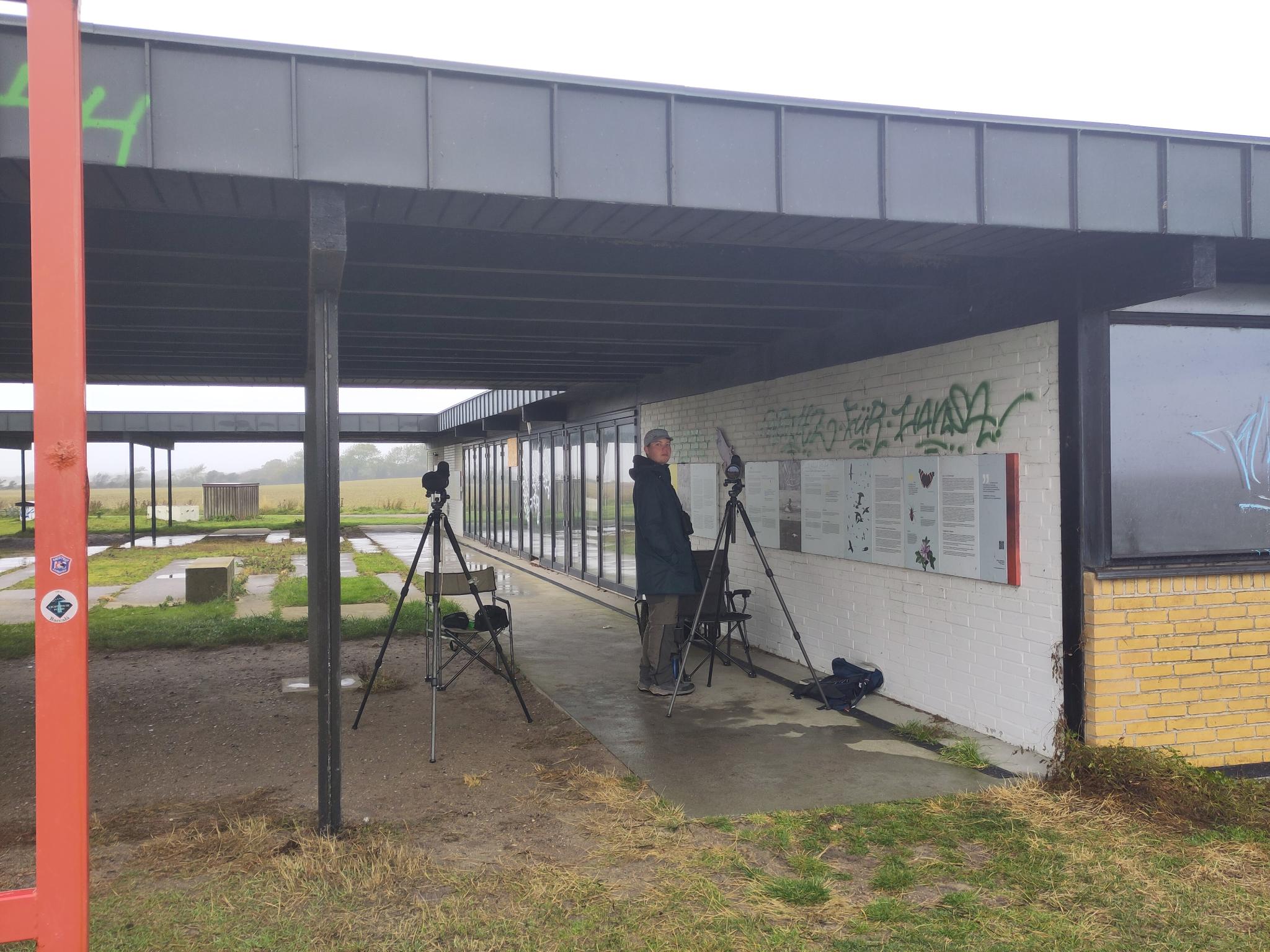
The only dry and somewhat warm spot out at the tip. Still, I am not looking forward to the real winter... Photo: Falk Ebert
From our shelter underneath the roof we also saw a few Divers, both Black-throated (Gavia arctica, „arctic seagull“) and Red-throated (Gavia stellata, „starry seagull“). However, we could not see the sky well and would have neglegted the passerine migration if there had been any. There were four Grey Wagtails (Motacilla cinerea, „ashy-grey moving-tail“), a nice surprise, as well as a flock of Twites (Linaria flavirostris, yellow-billed linen-weaver“) foraging in the surf. The real surprise though was a very late Barn Swallow (Hirundo rustica, „countryside swallow“). When I saw it, I was immediately reminded to one of Cyann’s blog entries from march 8th (yes, I’ve been following the station for a while). She saw the year’s first Swallow and wrote: „It felt just like seeing an old friend after a long time apart.“ I felt similar, just that my bird most likely will be the last Swallow until next spring.
Fugle registreret i standardtiden: 2.984 . Arter: 44. Tællingen startet 07:20, sluttet klokken 12:20.
Se alle dagens observationer på Gedser Odde i DOFbasen.
På stationen: Alba M. Holmberg, Signe Agermose Andersen, Philip Elbek, Leander, Børge Langkilde, Ole Friis Larsen, Marek Ebert, Mads Elley + fotografen Jan Johannesen og Mareks familie fra Berlin og Leipzig
Røde Glenter, en Vandrefalk og fire Nøddekriger
Ringmærkningen: Det er skønt at være tilbage på GFU efter lidt over et år, det er altid lidt som at komme hjem. Jeg er her med Signe og Leander i en lille uge så vi nyder en lille ferie.
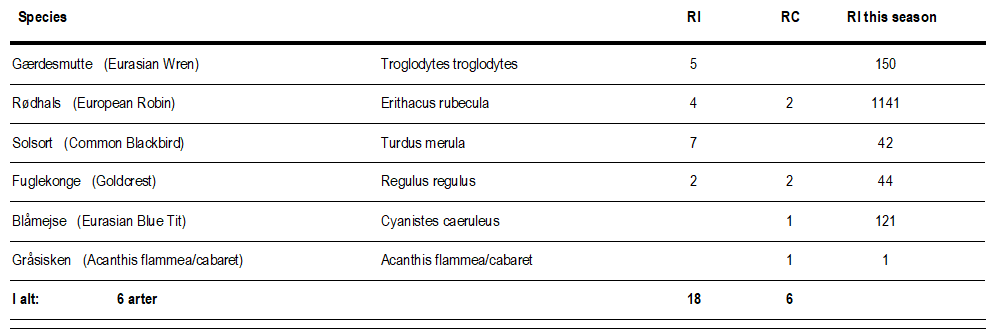
Dagen starter sent klokken 6.30 for tiden, så det føles helt som hverdag på den her årstid. Vi fik godt med blæst, men ikke så slemt at vi var nødsaget til at lukke net. Første runde lagde fint ud med en lille bunke Gærdersmutter (Tryglodytes tryglodytes), Rødhalse (Erithacus rubecula) og Fuglekonger (Regulus regulus). Herefter fangede vi ikke så mange fugle per runde, men det blev da til et par Vindrosler (Turdus iliacus) og en Gråsisken (Acanthis flammea).
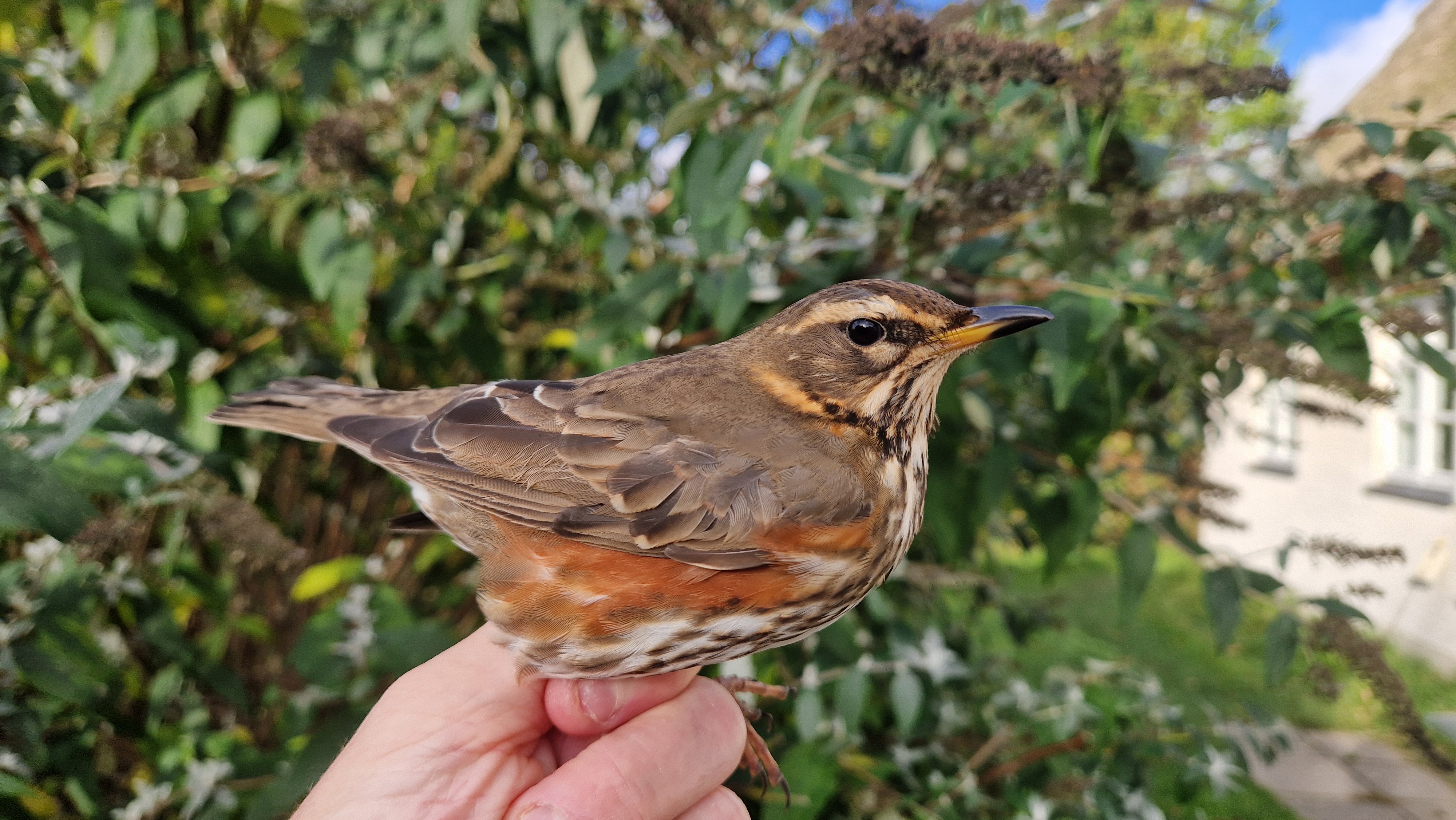
Ung Vindrossel poserer foran sommerfuglebusken. Foto: Philip Elbek
Et par Nøddekriger (Nucifraga caryocatactes) blev set fra stationshaven i løbet af dagen, og da jeg har levet under en sten den seneste måneds tid blev jeg rigtig glad! Det var godt lige at opleve lidt af invationen.
Marek's familie besøger os stadig og har igen lavet god aftensmad. Det er godt med liv på stationen.
Dagens mærkninger og genfangster: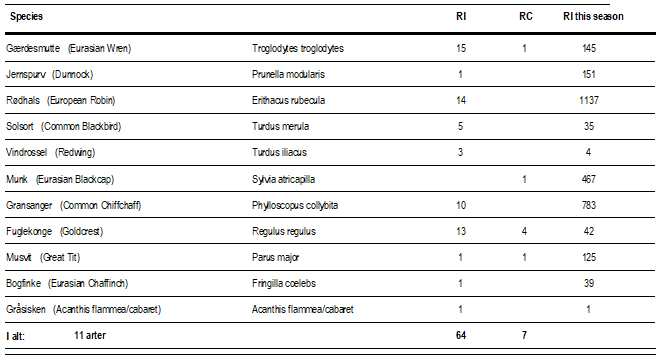
Trækket på Odden: Vi var fire, tre fra fuglestationen og Alex Rosendahl, som kommer på Odden nogle gange hvert år. Vinden var taget en del af fra søndag, men kom stadig fra en østlig retning. Til gengæld fik vi lidt mere sol, end meteorologerne havde stillet i udsigt, og vi fik hurtigt nogle travle timer med af tælle Ederfugle (Somateria mollissima), Pibeænder (Mareca penelope) og andre svømmeænder. Desuden kom der allerede tidligt en flok på 21 Røde Glenter (Milvus milvus), som sikkert havde overnattet sammen i nærheden.
 Adult/voksen Rød Glente (lyse øjne og sorte striber på halsen og brystet) på vej ud over havet i morgentrækket. Foto: Ole Friis Larsen/GFU
Gennem formiddagen gav det et helt pænt træk af glenter og Spurvehøge (Accipiter nisus), som endte på 77, hvilket er langt fra tidligere rekorddage, men dog er en af de bedre dage i det seneste par år. Dagens mest imponerende rovfugl var uden tvivl en Vandrefalk (Falco peregrinus), som pludselig dukkede op og ifølge fotograf Morten Scheller jagtede lidt efter nogle Strandhjejler (Pluvialis squatarola) på roemarken ud mod Odden, før den trak videre. Det var en stor og kraftfuld falk og derfor ganske givet en hun. En ikke helt færdig hætte og stribet underside på langs pegede på en ung fugl fra i år (1k, første kalenderår).
 Størrelsen samt et lyst øjenbryn i en ufuldstændig hætte og striber på langs af undersiden gjorde Vandrefalken til en ung hun. Foto: Ole Friis Larsen/GFU
Marek holdt styr på trækket af småfugle, som ikke var stort, samtidig med, at han deltog i tælleriet af fugle på havruterne. Et andet af dagens højdepunkter var fire Tyndnæbbede Nøddekriger (Nucifraga caryocatactes macrorhynchos), som egentlig slet ikke burde kaldes Nøddekriger, fordi deres tynde næb ikke er stærke nok til at knække nødder til forskel fra den tyknæbbede underart, som i høj grad lever af at samle og knække nødder. Dagens fire fugle gjorde et enkelt udfald mod havet, før de landede i den lange busk, hvor de sad og sundede sig, indtil de forsvandt tilbage mod nord. Vi har ringmærket to Tyndnæbbede Nøddekriger på fuglestationen i sidste uge, men ingen af dagens fugle var ringmærkede, så det var nye gæster i området.
 En af dagens fire Nøddekriger i den lange busk på Odden efter trækforsøget ud over havet. Foto: Ole Friis Larsen/GFU
Søndag så vi 559 Traner trække ud over havet i sydlige og sydøstlige retninger, mandag blev det bare til 29 i to små flokke. Nogle af dem er måske landet 65 kilometer sydøst for Gedser, hvor vores kolleger i den tyske naturbeskyttelsesorganisation NABU driver besøgs- og oplevelsescenteret Kranichwelten tæt på Rügen. Her fortalte lederen af stedet, Günter Nowald, i en video i weekenden, at der efterhånden er ankommet et større antal Traner nordfra (Sverige, Finland og formentlig Danmark), men at der er meget få unge fugle med i trækket. En andel på bare 4 procent unger fra i år tyder ifølge Günter Nowald på, at de skandinaviske Traner har haft en usædvanlig lav ynglesucces.
Fugle registreret i standardtiden: 8.299 . Arter: 67. Tællingen startet 07:17, sluttet klokken 12:17.
Se alle dagens observationer på Gedser Odde i DOFbasen.
På stationen: Alba M. Holmberg, Signe Agermose Andersen, Philip Elbek, Leander, Børge Langkilde, Ole Friis Larsen, Marek Ebert, Mads Elley + fotografen Jan Johannesen og Mareks familie fra Berlin og Leipzig
Tak for denne gang
Ringmærkningen: Efter at have tilbragt uge 42 på Gedser Fuglestation de sidste 3 år siger jeg (Søren) farvel og tak for endnu en dejlig uge.
På Gedser Fuglestation er det altid en fornøjelse at arbejde sammen med de mange entusiastiske unge mennesker, som både tæller trækobservatører og ringmærker. De unge mennesker cirkulerer mellem forskellige fuglestationer og kommer derfor med nye input til indtastning og måltagning m.m
De mange unge mennesker på GFU kan vel ses som et resultat af det store arbejde der gøres i DOF ung, og det store arbejde Simon har gjort på Skagen Fuglestation med at uddanne unge mennesker. Et arbejde vi på GFU har fulgt op på med vores såkaldte fuglestationsuddannelse hvor unge mennesker oplæres i såvel ringmærkning som træktælling. Udover de unge mennesker er det altid en fornøjelse og lærerigt at snakke med Ole (som er lidt ældre end mig), som altid er villig til at dele ud af sin store viden om fugle, naturpolitisk arbejde m.m. Så et ophold på GFU er altid lærerigt fort mig.
Blandt naturoplevelserne vil ringmærkning af Nøddekriger stå stærkt i erindringen hos mig, men også dage med store flokke af trækkende duer, finker, drosler m.m, som vi når at se på netrunderne stå stærkt på nethinden.
Og så er der jo de sociale oplevelser og fællesskabet på GFU. Et samspil som Marek i år fik til at gå op i en højere enheder, da han bagte og servicerede alle med såkaldt ”Nøddekrige Kage”.
Trækket på Odden: Efteråret var tydeligt søndag morgen. Selv om det ikke var koldt, var det blevet vantevejr; det gør indtastningen af observationerne lidt langsommere, når vanterne skal af og på, hver gang mobiltelefonen er i brug, og det skulle de mere end 500 gange i løbet af standardtidens 300 minutter. Høje bølger rullede ind over stranden og sled på skrænten langs kysten, og det var som altid svært at finde læ vinden på op til 12,3 meter i sekundet fra nordøst.
 Dagens vejr også for fuglene over havet. Foto: Ole Friis Larsen/GFU
Når det er nævnt, var det en fin efterårsdag med godt selskab af Michael Grell og Mads Elley og god hjælp på en ganske travl dag med næsten 19.000 fugle. 8.500 var nogle få, men store flokke af Ringduer (Columba palumbus), som føg rundt i vinden, før de fandt kursen og forsvandt mod syd over havet. Der var også godt gang i trækket af Ederfugle (Somateria mollissima), Pibeænder (Mareca penelope), Bramgæs (Branta leucopsis) og Toppede Skalleslugere (Mergus serrator).
 En af dagens tætte og store flokke af Ringduer ude over havet. Foto: Ole Friis Larsen/GFU
Sjovt var det at finde syv Skeænder (Spatula clypeata) enkeltvis i flokke af Ederfugle og andre andefugle. Det betyder, at vi indtil nu i dette efterår har set 1.443 Skeænder, og det er ny rekord for efterårstrækket af den art i vores standardtid i de 10 år, vi har gennemført den slags tællinger. Rekorden indtil nu var 1.427 i 2020.
 Selv om trækket af rovfugle fra land var småt, fik vi denne Fjeldvåge (Buteo lagopus) med på listen. En voksen fugl med mørke øjne. Kønnet er måske knap så sikkert, men måske en yngre adult/voksen han. Vi plejer at sige, at hanner har mørkt fuldskæg, mens hunner - og unge - har mørkt forklæde, men variationen er også så stor, at der er nogle af Fjeldvågerne, som ikke kan kønsbestemmes i felten. Foto: Ole Friis Larsen/GFU
Værd at bemærke søndag var også forekomsten af sene efterårsarter i trækket. Ni Havlitter (Clangula hyemalis) er ikke noget stort tal, men det største på en dag i dette efterår. På samme måde med 29 Bjergænder (Aythya marila) mod sydvest. Det er også tid for Mellemkjover (Stercorarius pomarina), men dem så vi ingen af. Til gengæld så vi fire Almindelige Kjover (Stercorarius arctica), og det var fint, for det er et stykke tid siden, vi har set en.
Flere andre oplevelser var med til at krydre dagen, som måske årets sidste Splitterne (Thalasseus sandvicensis) og 28 lommer, såvel rød- som sortstrubede.
Fugle registreret i standardtiden: 18.786 . Arter: 34. Tællingen startet 07:15, sluttet klokken 12:15.
Se alle dagens observationer på Gedser Odde i DOFbasen.
 Søndag aften havde vi mange nye ansigter på stationen. Der var udskiftning blandt ringmærkerne, og vores frivillige fra Berlin, Marek, har fået besøg af sin familie. Foto: Ole Friis Larsen/GFU
På stationen: Alba M. Holmberg, Søren Mygind, Ole Friis Larsen, Marek Ebert, Mads Elley
Erstatning blandt droslerne
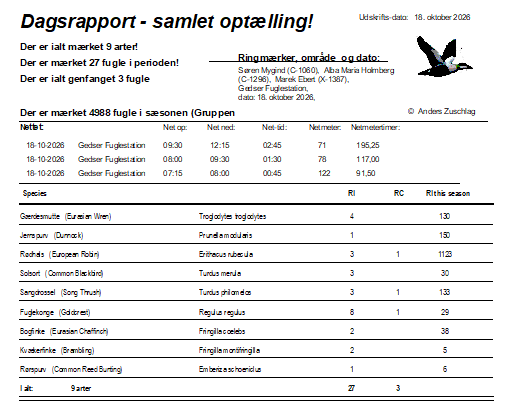
Ringmærkningen: Efter mange dage med vinde fra syd og få fugle, så vi meget frem til et vindskifte til nord/nordøsten-vinde, som forhåbentlig ville lede trækkende fugle fra Sjælland, Norge og Sverige ned til os, og give os lidt bedre fangsttal igen. Vores håb og drømme blev dog i stor grad ødelagt af en irriterende regnvejrsfront, som var over os i løbet af natten og vedblev indtil ca. kl. 8.30, hvilket tvang os til at udsætte standard-mærkningen.
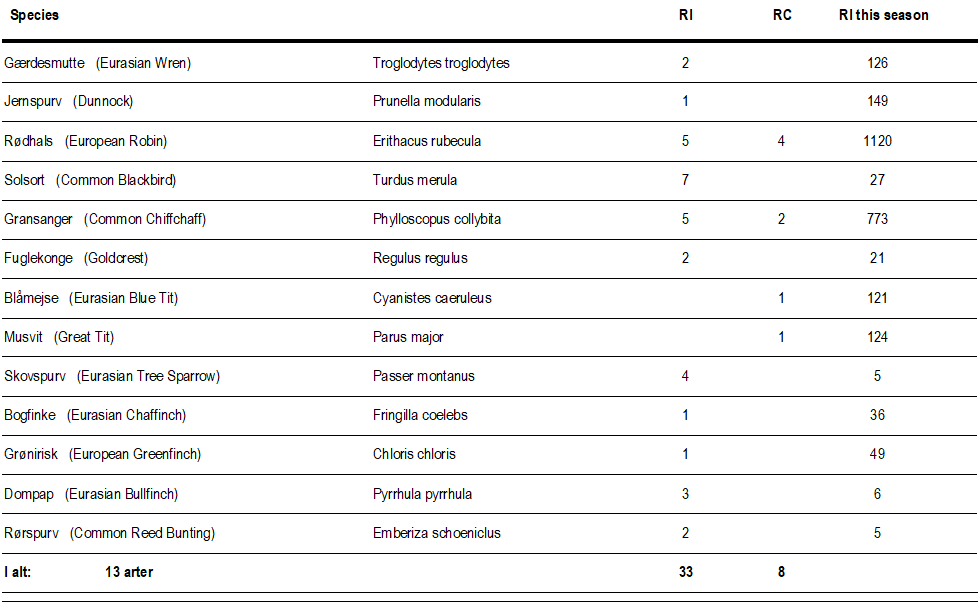
Da vi endeligt kunne åbne net, var der væsentligt færre fugle end vi havde håbet, men til gengæld var der en overraskende fin diversitet. Mest mærkværdigt var antallet af Solsorte (Turdus merula) fanget på hele 7 individer, mens ikke en eneste Sangdrossel (Turdus philomelos), som ellers har domineret vores drossel-fangsttal, fløj i nettene. Marek fik også en ny ringmærkningsart, da der på en af runderne sad hele 4 Skovspurve (Passer montanus) i samme net.
Derudover fik vi fornøjelsen af hele tre Dompapper (Pyrrhula pyrrhula), først en enlig han, og til sidst både en hun og en han, som var fanget i samme net.
 Et par unge Dompapper, med den røde han til venstre og den brune hun til højre. Foto: Alba M. Holmberg.
Et sidste highlight fra i dag var fangsten af to Rørspurve (Emberiza schoeniclus), først en han og senere en hun, hvilket er en art jeg indtil videre ikke har haft mange individer af, så det var en god øvelse i alders- og kønsbestemmelse på denne smukke værlinge-art.
 En ung Rørspurv hun. På denne tid af året ligner hunnen og hannen hinanden meget mere, end de gør om sommeren, hvor de er i deres yngledragter. På denne årstid kan man kende hunnen på, at det sorte mønster på isse- og hals-fjererne er mindre udpræget og har en anden facon end hos hannen. Foto: Alba M. Holmberg.
 Ung Rørspurv han, hvor man kan ane lidt mere sort på halsfjerene. Foto: Alba M. Holmberg.
Da dagen var ovre, var vi nået op på hele 33 nye mærkninger og 8 genfangster fordelt på 13 forskellige arter, hvilket, selv om det ikke er specielt mange, dog er væsentligt flere end vi har fået de seneste dage.
Dagens fangster:
Trækket på Odden: Vi har ikke set det, men nogle af de Pibeænder (Mareca penelope), der flyver forbi Gedser Odde på deres træk har haft gps-sendere på ryggen for at give mere viden om ændernes færden. I alt har 128 Pibeænder leveret data om deres trækmønstre, efter at de er blevet fanget og har fået sendere sat på i Nederlandene, Finland og Litauen. Fuglenes trækvaner har i nogen grad overrasket forskerne. Det skriver forskerne i en artikel i den seneste udgave af det videnskabelige finske magasin om fugle Ornis Fenneca.
Forskerne skriver i Ornis Fenneca, at bestandene af Pibeænder stiger i nogle af deres russiske yngleområder, men samtidig falder i Sverige og Finland. ”Effektive bevarings- og forvaltningstiltag til sikring af jagtbare, trækkende vandfugle kræver viden om deres rumlige og tidsmæssige udbredelse samt trækmønstre gennem hele den årlige cyklus”, skriver forskerne.
Deres resultater med gps-senderne viser, at hanner og hunner ser ud til at have forskellige trækmønstre og -ruter, og at forskellige bestande ikke følger de samme ruter forår og efterår. Blandt andet ser det ud til, at mange Pibeænder om foråret flyver fra deres overvintringsområder i Vadehavet og syddanske farvande ind i Østersøen og op i Finland, hvor de holder til et stykke tid i centrale dele af landet, før de spreder sig til Norge, Sverige og ind i Rusland for at yngle.
Det betyder, at selv om der ser ud til at overvintre flere Pibeænder i danske farvande, kan nogle af dem tilhøre skandinaviske bestande, der er i tilbagegang.
 Pibeænder over Gedser Odde i denne uge. Tilhører de en nordisk bestand i tilbagegang, eller har de fløjet 3.200 kilometer fra Sibirien og indgår i en bestand i fremgang? Foto: Ole Friis Larsen/GFU
Ved Gedser Odde blev der i standardtiden lørdag registreret 412 Pibeænder på træk Gedser Fuglestations træktællinger gennem 10 år viser en svingende årlig forekomst på efterårstrækket, men med en stigende tendens. GPS-senderne viser, at en del af de fugle, vi ser på efterårstrækket ved Gedser Odde har fløjet 3.200 kilometer fra ynglelokaliteter i floden Obs delta ved Karahavet dybt inde i Sibirien.
Her er et link til artiklen om Pibeænder i Ornis Fenneca
Trækket af Traner (Grus grus) har indtil nu ligget betydeligt under tidligere års efterårstræk med bare 601 af de store grå fugle på udtræk, hvilket dog er flere end sidste år, da den europæiske bestand blev ramt af fugleinfluenza på efterårstrækket, og fugle blev fundet døde i titusindvis. Årsagen til dette års lave efterårstræk kan ifølge vores kolleger i tyske NABU skyldes et mildt efterår, som kan have forsinket trækket fra såvel Norden som Østeuropa. Tyskerne undrer sig over, at der på den seneste ugentlige tælling kun blev registreret 13.630 Traner på det store samlingssted Linum nordvest for Berlin, men glæder sig om, at store flokke i de seneste dage er set på træk mod området. Vi vil selvfølgelig også følge udviklingen ved Gedser Odde.
Fugle registreret i standardtiden: 5.113. Arter: 30. Tællingen startet 07:14, sluttet klokken 12:14.
Se alle dagens observationer på Gedser Odde i DOFbasen.
Folk på stationen: Alba M. Holmberg, Søren Mygind, Marek Ebert, Thor Vincent Hansen, Anton Markvard, Ole Friis Larsen